
Vestavia Hills Previous Resident Eras
The right starting source depends on the date and the county. A recent Jefferson or Shelby parcel begins with the current tax roll and acquisition deed. Mid-century Vestavia Hills work can combine Birmingham directories with public census schedules and Board of Equalization house files. An older land trail may continue in probate books or Alabama Archives microfilm after a web index or image ends. These sources overlap, but they answer different questions about previous residents.
| Source | Years It Covers | Where Held | What It Shows |
|---|---|---|---|
| Jefferson recorded index | Official web cutoff not stated; historic records reach into the 1800s | LandmarkWeb and Birmingham probate archive | Recorded ownership chain, parties, dates, legal parcel |
| Shelby deed books | 1819 to present advertised; a 1902 index result verified | ROAM and Columbiana Records Room | Liberty Park-area ownership and instrument trail |
| Birmingham city directories | 1883 to present, except four no-publication years | BPL Southern History, in library | Published names and address clues between censuses |
| Federal census | Decennial schedules through 1950 are public | NARA and library databases | Household members and relationships at one census date |
| Board of Equalization house files | Buildings constructed before the mid-1970s | Birmingham Public Library Archives | Structure facts and historic assessed values |
| Permit archive | Official cutoff not located | Vestavia Hills clerk and Building Safety | Construction or alteration dates and named project roles |
Begin with the newest reliable record and work back. The modern parcel fixes the county, parcel number, and legal description. A directory can then test past occupants, while a census adds relationships only for its released enumeration year. An obituary or estate file may close a person's trail, but it should not replace the deed chain for ownership.
Start a Vestavia Hills Resident Trail
First confirm whether the parcel is in Jefferson or Shelby County. A Birmingham mailing city can still describe a Liberty Park parcel inside Vestavia Hills and Shelby County. The current county property search supplies the indexed owner, parcel identifier, situs address, and separate owner mailing address. Save the tax year as well. A mailing match can support an owner-occupancy clue, but it does not prove who lived there.
Next copy the legal subdivision, lot, block, map book, or section data. Those identifiers survive changes in postal city and annexation labels better than a street line. Rocky Ridge and Altadena joined through changes in the 1980s, Liberty Park in 1992, and Cahaba Heights in 2002. Search the older neighborhood label when a modern Vestavia Hills query fails.
Note: No verified Vestavia Hills street-renumbering chronology exists, so legal parcel data is safer than guessing that a number changed.
Trace Vestavia Hills Previous Owners
A backward deed chain turns each seller into the next search subject. Jefferson County offers Name, Document, Book and Page, Consideration, Record Date, Instrument Number, and Legal modes in LandmarkWeb. Shelby County ROAM adds phonetic name matching, many document types, legal-description fields, and sort controls. Neither recorder performs a title examination, so record exactly what the index establishes without turning a grantee into a current resident.
- Open the current county parcel record. Copy the owner name, parcel number, situs, and legal description.
- Find that owner's acquisition deed. Record the grantee, grantor, filing date, instrument number, and book or page.
- Search the grantor as a grantee to find that seller's earlier purchase. Hold the legal description constant.
- Repeat the cycle while noting releases, assignments, probate decrees, tax deeds, plats, and name variants that affect the parcel trail.
- When online coverage or an image stops, continue at the probate records room or in archival microfilm with the citations already gathered.
- Grantor
- The party transferring an interest in the recorded instrument.
- Grantee
- The party receiving the interest named in that instrument.
- Chain of title
- The linked sequence of instruments that traces recorded interests over time.
- Legal description
- The lot, block, subdivision, or survey language that identifies land apart from its mailing address.
A legally complete title study can require more than deeds. Releases, assignments, plats, restrictions, probate decrees, and tax instruments may affect the recorded chain. For previous-resident research, capture each named party and role, but reserve any title conclusion for the full official record.
Vestavia Hills Resident Deed Gaps
Jefferson LandmarkWeb allows public data searches and a watermarked first page or index. A clean image requires payment or subscriber access. Jefferson Probate did not publish a definitive online cutoff in the research, so do not assign one. A mailed request should include buyers and sellers if known, an approximate sale date, the party or property address, and any instrument or book-page citation. The Birmingham office and its older books are the fallback when the web trail ends.
Shelby Probate advertises deeds from 1819 to the present online, and a test found index data from 1902. Yet some historic mortgage cancellations lack an electronic image. That is the useful quirk: deep search metadata does not guarantee a complete scanned file. The Shelby County Records Room at 112 North Main Street in Columbiana remains the authoritative next stop for a Liberty Park-area trail.
Vestavia Hills Resident House Files
Birmingham Public Library documented a rare local method with an Indian Hill Road house in Vestavia. Its house-history research guide pairs Board of Equalization files for structures built before the mid-1970s with Polk directories. The property file can supply structure facts and past assessed values. The directory may then add the name printed at the address for a chosen year.
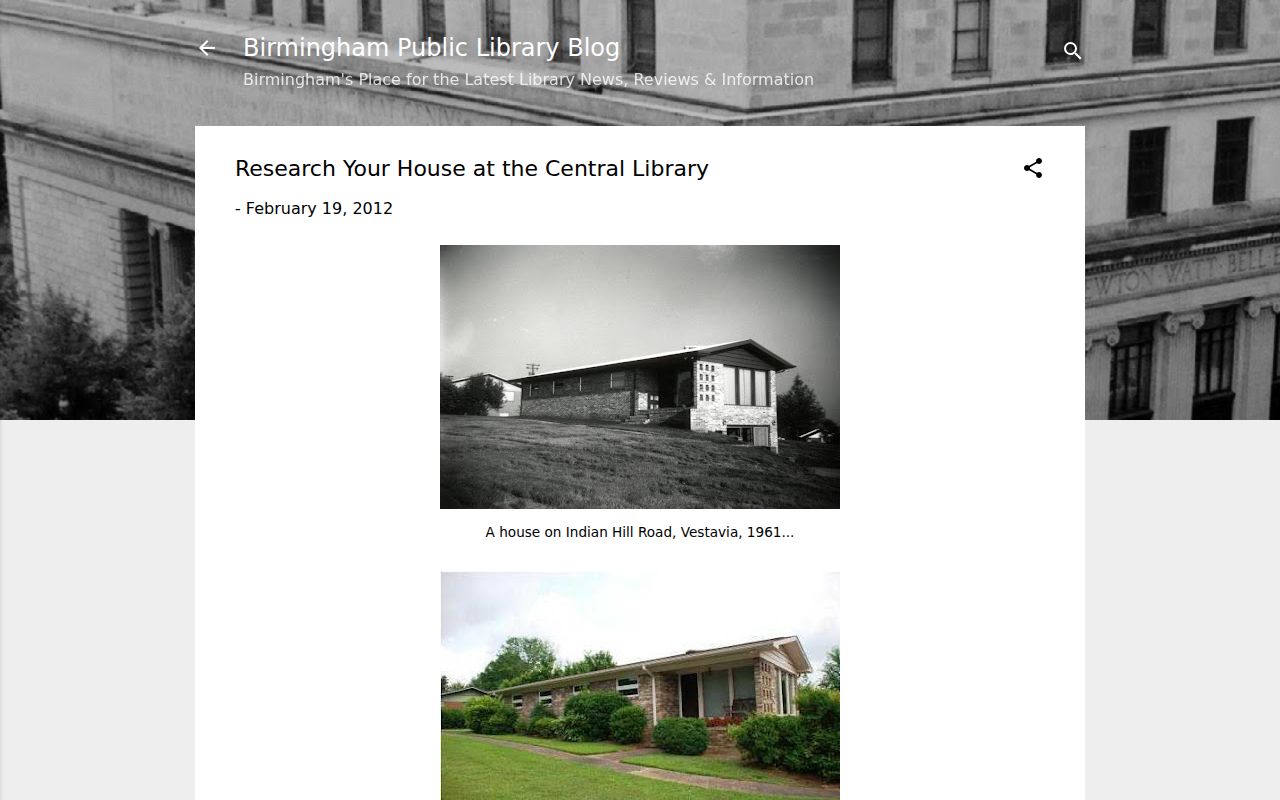
The example shows why previous-resident work should use two tracks. A house file dates the physical property, while a directory links a published name to the address. Neither one alone proves every member of a past household. BPL Southern History materials are used in the library, where scanners and copiers are available and staff can assist with its obituary index when given a name and date. The Library of Congress Sanborn collection is another possible map route, but its Birmingham catalog does not prove that a sheet covers the Vestavia Hills address, so inspect the key before using it.
Pair Vestavia Hills Resident Years
City directories fill the years between released federal censuses. Birmingham Public Library's run begins in 1883 and continues to the present, with no directory published in 1933, 1936, 1943, or 1945. Those gaps do not show that a person left. Begin with a volume near the known date, preserve the printed spelling and initials, and consult that volume's abbreviation key before interpreting any code.
- Find the address or surname in a directory year close to the event being studied.
- Check one or two editions on each side, using the street section where the volume offers one.
- Pair the result with the nearest public census schedule through 1950 and compare names, ages, and relationships.
- Follow a disappearance with newspaper, obituary, deed, and probate searches rather than assuming a move or death.
The full holdings and volume-reading rules belong to the Vestavia Hills city directory page. For this backward-address task, the key is chronology: the directory reports one publication moment, and the census reports one enumeration date. Their agreement is strong evidence, but each must retain its own date and source.
Archive Vestavia Hills Previous Residents
When local web and library sources stop, the Alabama Department of Archives and History research entry leads to state and county catalogs. ADAH microfilm includes deeds, marriages, wills, estate files, guardianships, and limited vital registers. Its county database searches by county and a singular record type, while most originals remain with the office that created them.
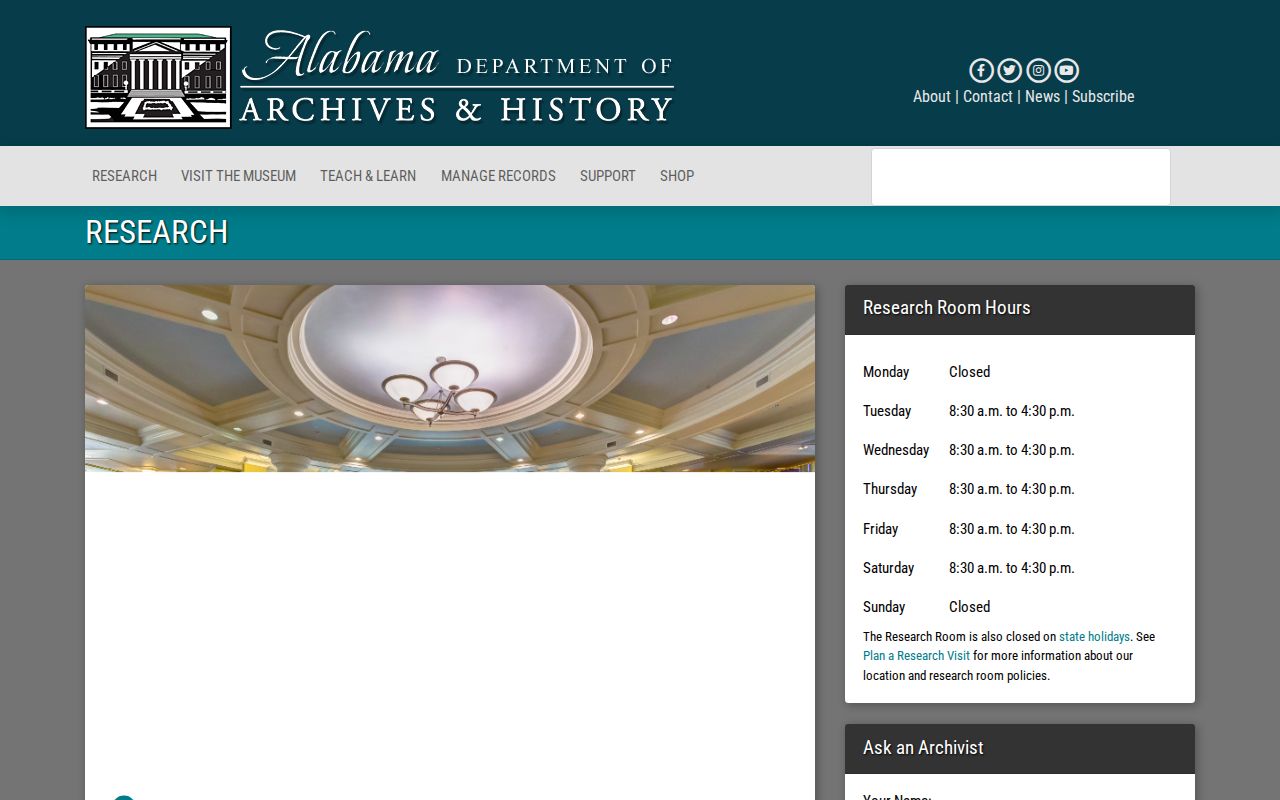
The archive route is most productive after the county and record series are known. Bring a grantor or grantee, approximate year, record type, and recording citation. ADAH's research room is at 624 Washington Avenue in Montgomery and operates Tuesday from 8:30 a.m. to 4:30 p.m. The published phone is 334-242-4435. A broad request for everyone linked to an address is less useful than a citation-driven search.
Close Vestavia Hills Resident Trails
Owners are only one layer of previous residents. A historic directory may name an occupant who never appears in the deed chain. A released census can identify related people recorded in the same household. BPL newspaper microfilm and its obituary index can then connect a disappearance to a death, survivors, a former address, or a church and civic tie. Staff can locate an obituary when supplied with useful name and date facts.
Probate records can identify an estate, heirs, petitions, and later land transfers, but jurisdiction still matters. Alabama probate judges administer estates and record land instruments, while the county must match the event or parcel. Vestavia City Hall is not the keeper of those county files. No verified municipal cemetery database or authenticated Vestavia Sanborn sheet was found, so neither should be promised as a standard address source.
End with a dated evidence log. List the record, custodian, identifier, name as printed, party role, address or legal description, and access date. Mark whether each source establishes title, a published occupant clue, a household relationship, or only an application role. That distinction keeps a past-resident narrative accurate.
Lawful use. Research Vestavia Hills previous residents for house history, genealogy, heirs, or personal curiosity. Never use an address trail to stalk, track, threaten, or harass a living person.